
Everything you need to know about the Red Keffiyeh
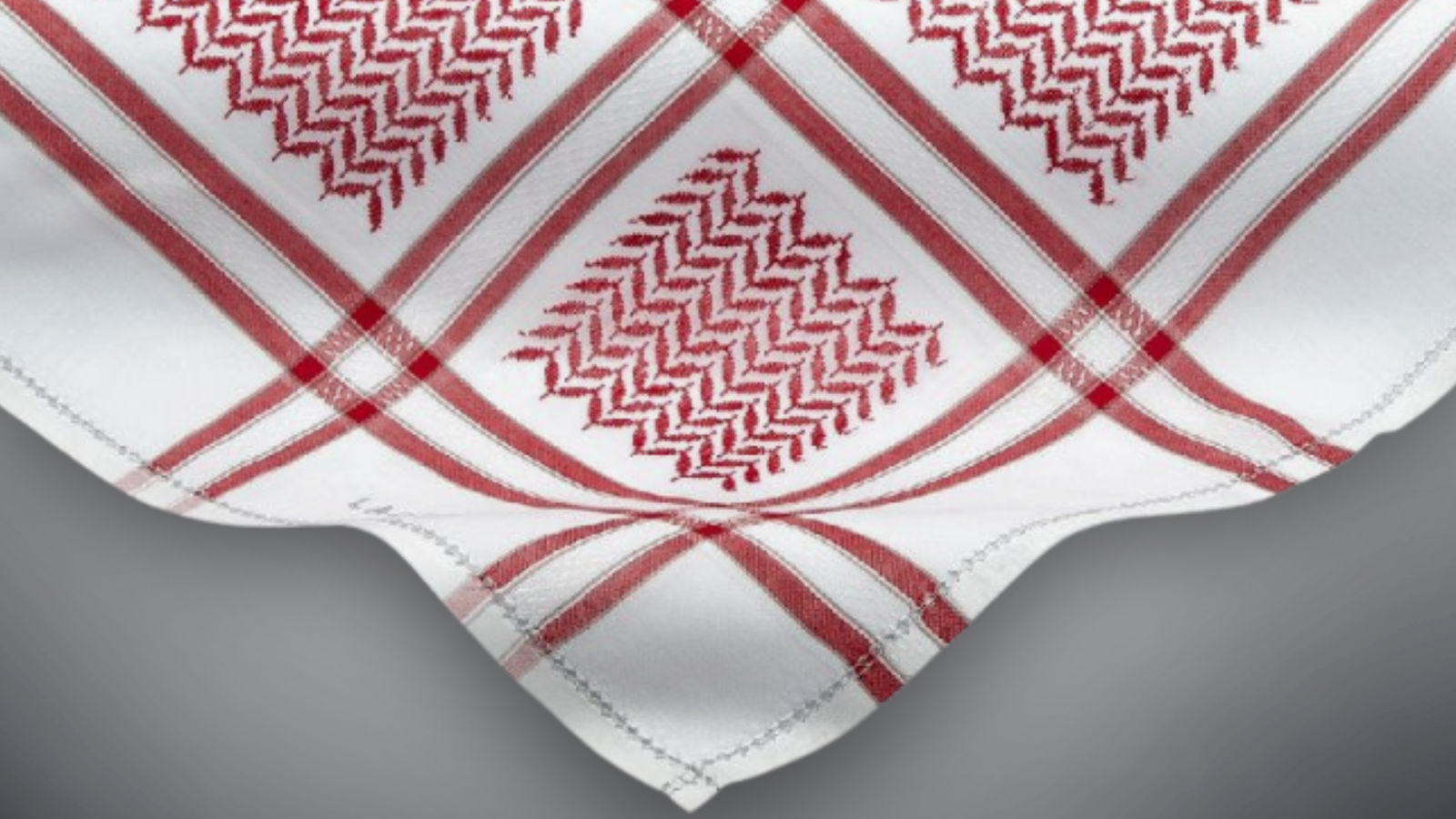
The red keffiyeh, often called the Jordanian shemagh or hatta, is a striking square scarf woven in red and white. It has a story all its own and has journeyed from practical headgear to national emblem. Worn across deserts and city streets, the red keffiyeh carries both heritage and style.
What is a red keffiyeh
A red keffiyeh is a square cotton scarf with a checkered pattern in red and white. It shares the same basic shape as the Palestinian keffiyeh but is distinguished by its bolder colour palette and a knitted edge. Historically, these red scarves were worn by Bedouins in the southern Arabian Peninsula and along the red deserts to shield against sun and sand. Over time, the design became associated with Jordan and neighbouring countries, where it remains an enduring cultural symbol.
Key features
- Square shape: just like all keffiyehs and shemaghs, it starts as a square of fabric.
- Materials: typically woven from breathable cotton; some modern versions blend synthetic fibres for durability.
- Colour and pattern: bold red and white motifs create a clear, repeating design.
- Edge finish: many red keffiyehs include a decorative knitted fringe that sets them apart from the flat hem found on many black versions.
Origins and cultural significance
Deep roots in Jordan and the Gulf
The red keffiyeh traces its roots to the Hashemite Kingdom of Jordan and the surrounding Gulf regions. It has become a significant national icon in Jordan and is commonly referred to as the Jordanian shemagh. Woven from cotton and decorated with red and white patterns, the scarf reflects local customs and heritage. In Jordan, red symbolises bravery and power, while white stands for knowledge, unity and kindness.
Beyond symbolism, the red keffiyeh has practical origins. Bedouins and farmers used it to protect their heads and necks from sun, sandstorms and cold desert nights. In Jordan, the red shemagh has been part of official uniforms, particularly for the Badia Desert patrols, since the 1930s. Today it is worn at national events and celebrations as a sign of unity and pride.
A wider regional presence
While Jordanian identity is central, red keffiyehs are also popular in Iraq and other Gulf countries. In many villages, the scarf’s colours recall the desert landscape and the sun baked red sands. Historically, travellers across the Arabian Peninsula carried red shemaghs as practical protection; their use spread along trade routes and camel caravans, embedding them in daily life.
Red keffiyeh versus black keffiyeh
People often confuse red keffiyehs with the black and white Palestinian keffiyeh. Both are square scarves with long histories, yet they carry different meanings and motifs:
- Colour symbolism: the black keffiyeh is primarily black and white and has become a symbol of Palestinian identity and resistance. The red keffiyeh features red and white, reflecting Jordanian heritage and the colours of the Hashemite flag.
- Pattern complexity: black keffiyehs often display intricate patterns symbolising olive branches and fishing nets, representing Palestinian ties to land and sea. Red keffiyehs tend to have bolder, simpler motifs with a knitted edge.
- Geographical association: black keffiyehs are closely linked to Palestine and its diaspora, whereas red keffiyehs are native to Jordan, Iraq and the Gulf regions.
These differences show how colours and patterns carry layers of meaning beyond mere aesthetics.
Who wears the red keffiyeh today
The red keffiyeh remains a fixture in Jordanian daily life and ceremonial occasions. Soldiers in Jordan’s Badia units, students at universities and participants in independence celebrations all wear the scarf as a proud emblem. In rural areas, farmers and shepherds still use red keffiyehs for sun and dust protection.
Elsewhere in the Middle East, men and women in Saudi Arabia, Iraq and the broader Gulf region also wear red and white shemaghs. For many, it is part of traditional dress; for others, it has become a stylish accessory reflecting desert heritage. In recent years, travellers and outdoor enthusiasts worldwide have adopted red keffiyehs for their practicality and distinctive look. When worn outside their cultural context, it is important to understand and respect the scarf’s origins.
How to style a red keffiyeh
You can tie a red keffiyeh in several ways. Here are a few traditional and modern approaches:
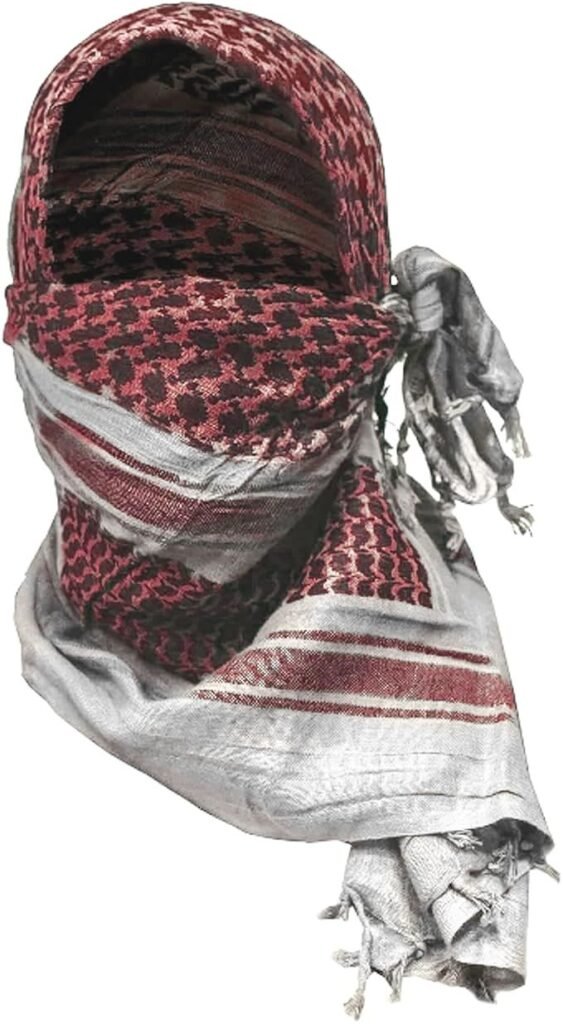
- Classic head wrap: fold the scarf into a triangle, place the folded edge across your forehead, wrap the ends behind your head and secure them. This style protects against sun and sand while honouring the scarf’s Bedouin roots.
- Neck scarf: fold the square into a triangle, drape the point at the front of your chest and tie or tuck the ends around your neck for a versatile, casual look.
- Shoulder drape: place the folded triangle over one shoulder, letting the point hang in front. This formal style is often seen at cultural events and official ceremonies.
- Loose wrap: fold the scarf into a band and loosely wrap it around your head or neck for a relaxed, modern take.
Where to find a red keffiyeh
When buying a red keffiyeh, look for scarves woven from breathable cotton with clearly defined red and white patterns. Choose sellers that source products ethically from artisans in Jordan or neighbouring regions; authentic keffiyehs help support local weaving traditions. If you are seeking quality red keffiyehs, explore collections offered by trusted retailers.
Final thoughts
The red keffiyeh is more than a colourful accessory; it is a living symbol of Jordanian identity, desert heritage and practical resilience. From shielding Bedouins from sandstorms to marking national celebrations, this red and white scarf tells a story woven through time. Understanding its origins and respecting its meaning ensures that, wherever it travels, the red keffiyeh remains a bridge between past and present.