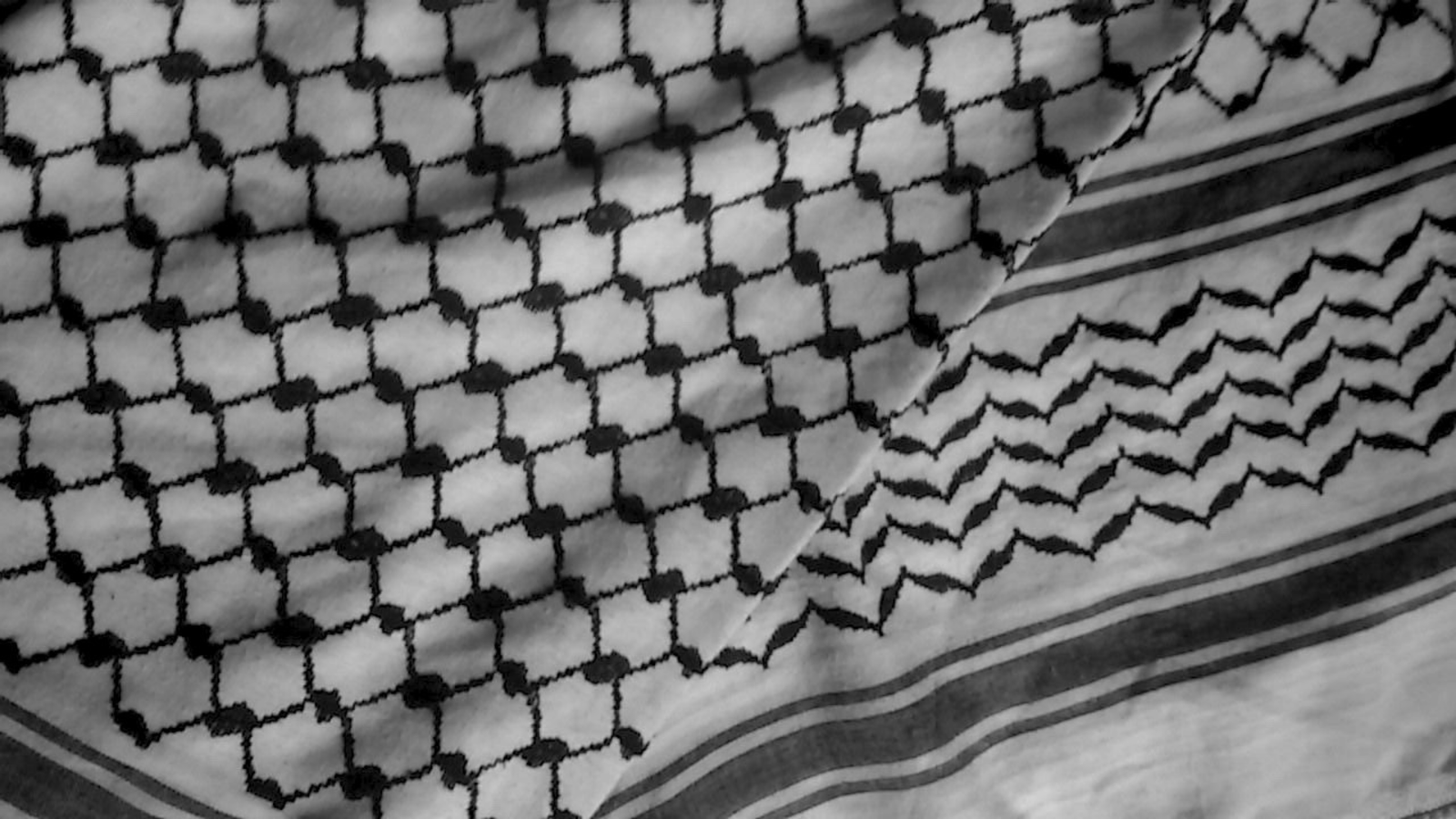

The original keffiyeh is more than a piece of cloth. It tells stories of place and people and stands as a symbol of solidarity. This guide explains what makes a keffiyeh authentic, why originality matters and how to recognize real craftsmanship without relying on brand names. At the end you will know how to choose a scarf that respects its roots and supports the hands that weave it.
What makes a keffiyeh original
A keffiyeh is a square scarf woven from soft cotton fabric. People fold it into a triangle and wrap it around the head or neck to shield themselves from sun, wind and sand. Black and white patterns are most common, but red and white versions and other colors exist. The scarf’s origins lie in West Asian communities of farmers and nomads who used it for protection before it became a cultural emblem. An original keffiyeh carries more than function: its fishnet shapes refer to fishing and survival, its bold lines reflect trade routes across the region and its olive leaf motifs symbolize resilience.
How authentic keffiyehs are made
There is only one remaining traditional factory in Hebron that continues to weave keffiyehs on antique looms. The workshop opened in 1961 and once ran fifteen machines, producing around one hundred fifty thousand scarves a year. Today only a few looms remain, and production has fallen to about ten thousand scarves annually due to trade restrictions and competition from mass produced imports.
In this workshop the craft follows a centuries‑old process. Artisans use a cross stitch technique to create two layers of pattern. The base forms a fishnet design and the border displays ornate motifs. They cut threads by hand and knot and sew the tassels one by one. Weavers describe their work as more than a job; each scarf carries pride and heritage.
How to spot an original keffiyeh
With so many imitations on the market, look for these features when buying a keffiyeh:
- Woven patterns on both sides – Genuine scarves have the design woven through the fabric; printed patterns appear clear on one side and faint or shiny on the other.
- Soft, breathable cotton – Traditional keffiyehs use cotton or cotton blends. Avoid scarves made from slick polyester or synthetic fibres.
- Hand knotted tassels – Authentic pieces feature tassels that are tied or braided by hand. Machine sewn fringes or frayed edges may signal a knock off.
- Recognisable motifs – Original patterns include fishnet shapes, zigzag lines and olive leaves. Generic houndstooth or unclear prints suggest a copy.
- Origin tag – True Palestinian keffiyehs often carry a tag with “Made in Palestine” and the name of the workshop in Arabic and English.
- Trusted source – Purchase from sellers who work directly with Palestinian producers. The historic factory in Hebron supplies its scarves through approved partners.
Support the tradition
Choosing an original keffiyeh means supporting the artisans who keep this craft alive. Look beyond fashion trends and make an informed purchase. Seek sellers who disclose where the scarf comes from and pay fair prices to weavers.
At Kuffiyah, we believe in preserving tradition. Our shop offers authentic Palestinian keffiyehs woven in a factory in Nablus city. These scarves follow the same techniques used in Hebron and carry the same heritage. By buying from us, you support local craftspeople and receive a genuine piece of history.
Final thoughts
The keffiyeh remains a powerful symbol of identity and resilience. Knowing how to identify an original keffiyeh helps protect this heritage from being diluted by mass produced imitations. When you choose a scarf with woven patterns, natural fibers, hand knotted tassels and clear origin tags, you honor the story behind the threads. With every authentic keffiyeh you wear, you carry a small piece of Palestinian history and support the communities that make it.