
When people search for keffiyeh meaning they are usually asking one of two things.
First, what is this black and white patterned scarf in simple words. Second, what does it say about a person when they choose to wear it.
The short answer is that the keffiyeh is a traditional Arab scarf that became a powerful symbol of Palestine, resistance and belonging. Over time it has also become part of global fashion, which is why its meaning can shift depending on who wears it and why.
This guide walks through the story behind the scarf and what it can mean today.
What is a keffiyeh?
The keffiyeh (also written kufiya, kuffiyah or hatta) is a square cotton scarf, usually folded into a triangle and worn around the head or shoulders. It originally developed as practical protection from sun, dust and cold for farmers and Bedouins across Iraq, Palestine, Jordan and the wider region.
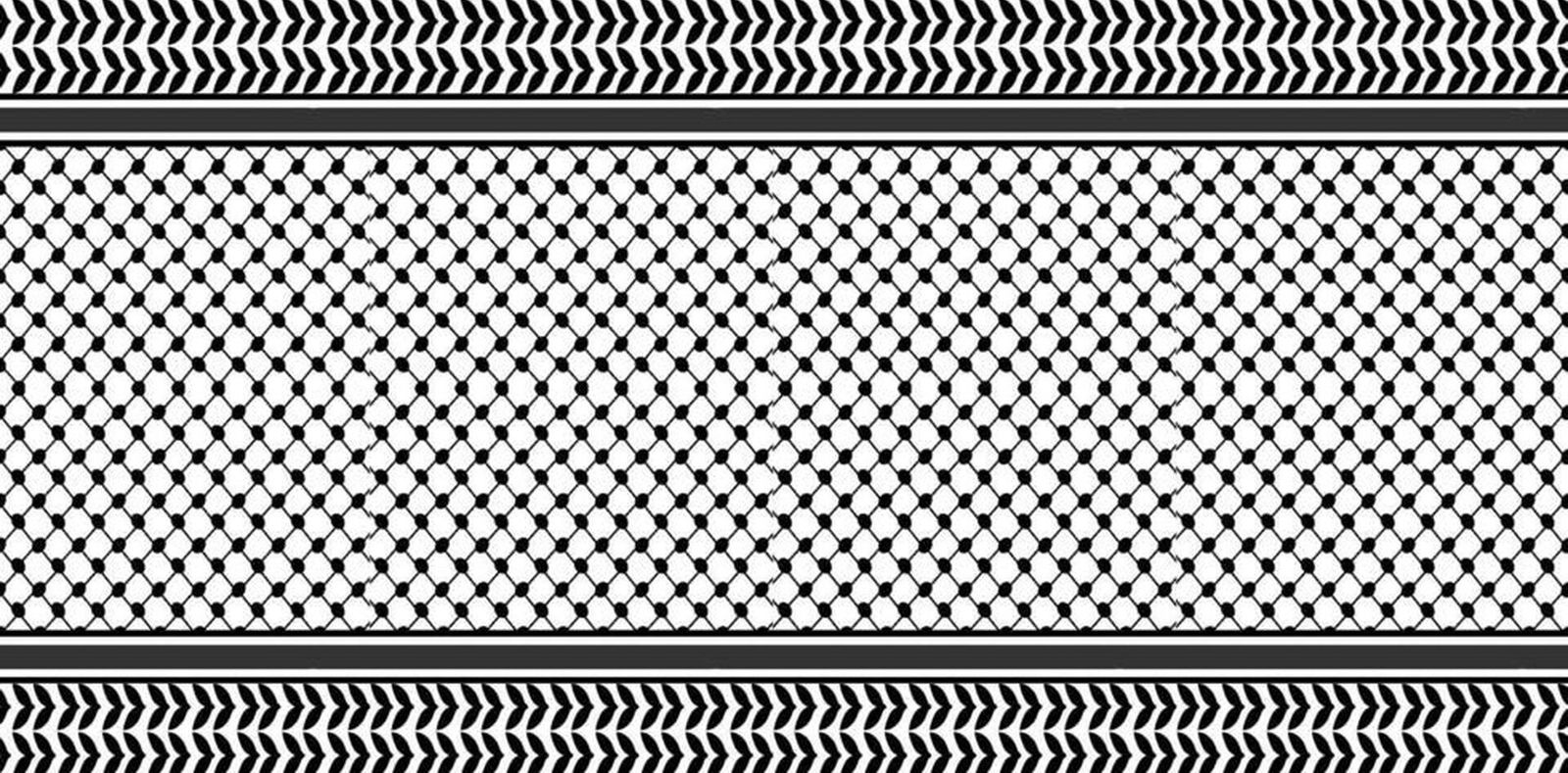
The black and white Palestinian keffiyeh is the best known version today. It carries a distinctive woven pattern:
- Olive leaf motif symbolising deep roots in the land, strength and resilience.
- Fishnet pattern symbolising the Mediterranean Sea and the livelihood of Palestinian fishers.
- Bold parallel lines symbolising historic trade routes that crossed Palestine.
So even before politics, the pattern itself tells a story about earth, sea and movement.
From farm cloth to national symbol
For centuries the keffiyeh was simply working people’s clothing. That changed in the 1930s during the Arab Revolt against British rule in Palestine. Rural fighters wore the scarf while urban leaders in cities wore the tarbush (fez). To hide fighters and show unity, Palestinian leaders called on everyone to wear the keffiyeh.
From that moment the scarf was no longer just a piece of cloth. It became a visible sign of a shared Palestinian identity and of resistance to colonial rule. Photos from the later twentieth century reinforced this meaning, especially the image of Yasser Arafat and many other activists wearing the keffiyeh on the world stage.
Keffiyeh meaning today: what it says when you wear it
Because the keffiyeh has travelled far from its original home, it can carry several meanings at once. Context matters. Here are some of the strongest associations.
1. Supporting Palestine
For many people around the world, especially at protests and rallies, the keffiyeh is a clear sign of solidarity with Palestinians and their struggle for freedom, dignity and self-determination.
Wearing the scarf can mean:
- remembering ongoing displacement and occupation
- honouring Palestinian lives and culture
- calling for justice and human rights
This is why the keffiyeh appears so often in marches, sit-ins and campus actions, and also why it can provoke strong reactions or even hostility in some places.
2. Rebellion and resistance
Beyond Palestine, the keffiyeh has been taken up as a general symbol of rebellion and anti-imperial politics. Revolutionary figures and movements around the world have used it to express resistance to oppression, from anti-colonial struggles to anti-apartheid activism.
In this sense the scarf can mean “I stand with people who resist injustice”, even for those who are not Palestinian themselves.
3. Shared Arab identity and roots
Across parts of the Middle East the keffiyeh is also a marker of wider Arab or regional identity. Different colours have local meanings:
- Black and white is most closely linked with Palestine.
- Red and white is often associated with Jordan and parts of the Arabian Peninsula.
For many families, especially in the diaspora, wearing the keffiyeh at weddings, holidays or community events is a way of keeping a link with home and with older generations.
4. Fashion statement
From the late 1970s onward the keffiyeh was picked up by Western subcultures, then by high-fashion designers and finally by mainstream brands. It appeared on runways, in music videos and in street style around the world.
Sometimes the scarf in this context is still worn with full awareness of its political meaning. In other cases it is treated as a graphic pattern with no deeper story. This “just a cool accessory” approach has created ongoing debates about cultural appropriation and the risk of erasing Palestinian history from the object that represents it.
5. Everyday comfort and tradition
In many places, especially in the Levant and Gulf, the keffiyeh is still simply a practical scarf. People wear it to keep the sun off, to stay warm in winter, to ride a motorbike or to work outdoors. For them the meaning is quiet and personal: comfort, habit and continuity with the way their fathers and grandfathers dressed.
Colors and variations: does color change the meaning?
Color does matter, although meanings can overlap.
- Black and white is widely recognised as the Palestinian keffiyeh and carries the strongest connection to Palestinian identity and resistance.
- Red and white is linked with Jordan, parts of Iraq and the Arabian Peninsula, and can emphasise Bedouin heritage or national pride rather than specifically Palestinian politics.
- Other colours such as green, purple or pastel tones usually signal fashion or trend-driven designs. On their own they may carry less political weight, though some people still read them through the original Palestinian story.
Because of this, if someone wears a black and white keffiyeh at a demonstration, most viewers will read it as a political statement, while a pastel scarf at a music festival might be seen mainly as style.
Who makes the keffiyeh and why that matters
Another layer of meaning lies in where the scarf is produced. There is now only one historic Palestinian keffiyeh factory still weaving in Palestine, the Hirbawi family workshop in Hebron. They have been producing keffiyehs since the 1960s and helped set up kufiya.org to sell their scarves directly.
Buying from Palestinian producers or from sellers who work with them can turn the scarf into a small act of economic support as well as cultural solidarity. Choosing mass-produced copies from companies that ignore the history sends a different message.
Is it okay to wear a keffiyeh if you are not Palestinian?
There is no single rule, but intent and awareness matter.
Wearing a keffiyeh with a basic understanding of its history and with respect for the people it represents is very different from wearing it casually while dismissing or denying that history. Listening to Palestinian voices, learning the story of the scarf and buying from ethical sources all help keep the meaning aligned with solidarity rather than empty trend.
If you feel unsure, ask yourself:
- Do I know what this symbol means to Palestinians today?
- Am I willing to explain that meaning if someone asks?
- Am I wearing it in a space where it might put others at risk or make them feel unsafe?
Honest answers to those questions are part of wearing the keffiyeh responsibly.
Keffiyeh meaning in public life and controversy
Because the keffiyeh has become such a visible symbol, it often appears in news stories. People have been targeted on public transport or in the street for wearing it. Teachers and workers in some countries have even been told to remove it at work, which has sparked debates about free expression and political symbols.
These incidents show how strongly the scarf is tied to the Palestinian cause in the public imagination. For supporters it stands for justice, memory and resistance. For those who oppose that cause it can trigger anger or fear, even when worn quietly.
So what is the keffiyeh meaning in one line?
The keffiyeh began as a simple farmer’s scarf but now carries layers of history, land and struggle. At its heart it means connection to Palestine, to the people who live there and to their ongoing fight to exist with dignity.
Some will wear it as a sign of support. Some will use it as a symbol of rebellion. Others will put it on for comfort or style. But underneath all of these is the same woven pattern that holds a story of soil, sea, trade routes and a people who refuse to disappear.
That is the deeper keffiyeh meaning.