
A keffiyeh shop does more than sell a scarf. It shares a piece of heritage that began in the desert and now appears on city streets. Farmers, travellers and activists wear this simple cloth for protection. It shields them from sun, wind and sand and carries stories of identity and resilience. In this guide you will learn what a keffiyeh is, how artisans make it, why patterns and colors matter and how to pick a trusted shop.
What is a keffiyeh
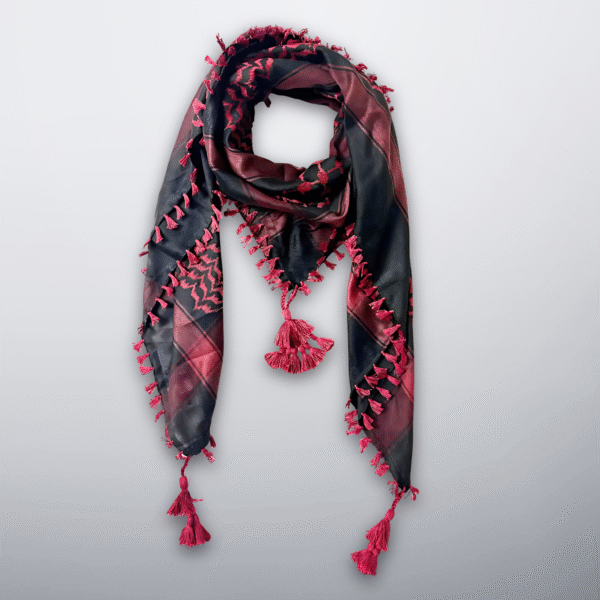
Keffiyehs are square head coverings made from lightweight cotton. People fold the cloth into a triangle and wrap it around the head or neck. This shield protects them from sun, dust and sand. Many secure their scarf with a simple cord known as an agal. Bedouins and villagers created the keffiyeh for work. Over time it grew into a symbol of daily life and solidarity. Although many use “keffiyeh,” “shemagh” and “ghutra” interchangeably, each has regional differences. For example, a Jordanian shemagh is often red and white with tassels. Larger tassels can signal status.
Key features
- Square shape: Most scarves measure about one metre per side, making them versatile for head wraps, neck scarves or shawls.
- Breathable fabric: Traditional pieces use cotton, sometimes blended with wool, to keep the wearer cool in hot climates and warm in cooler nights.
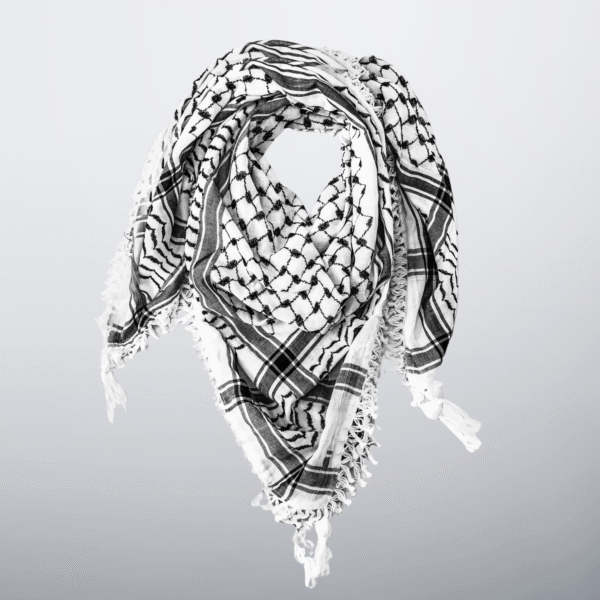
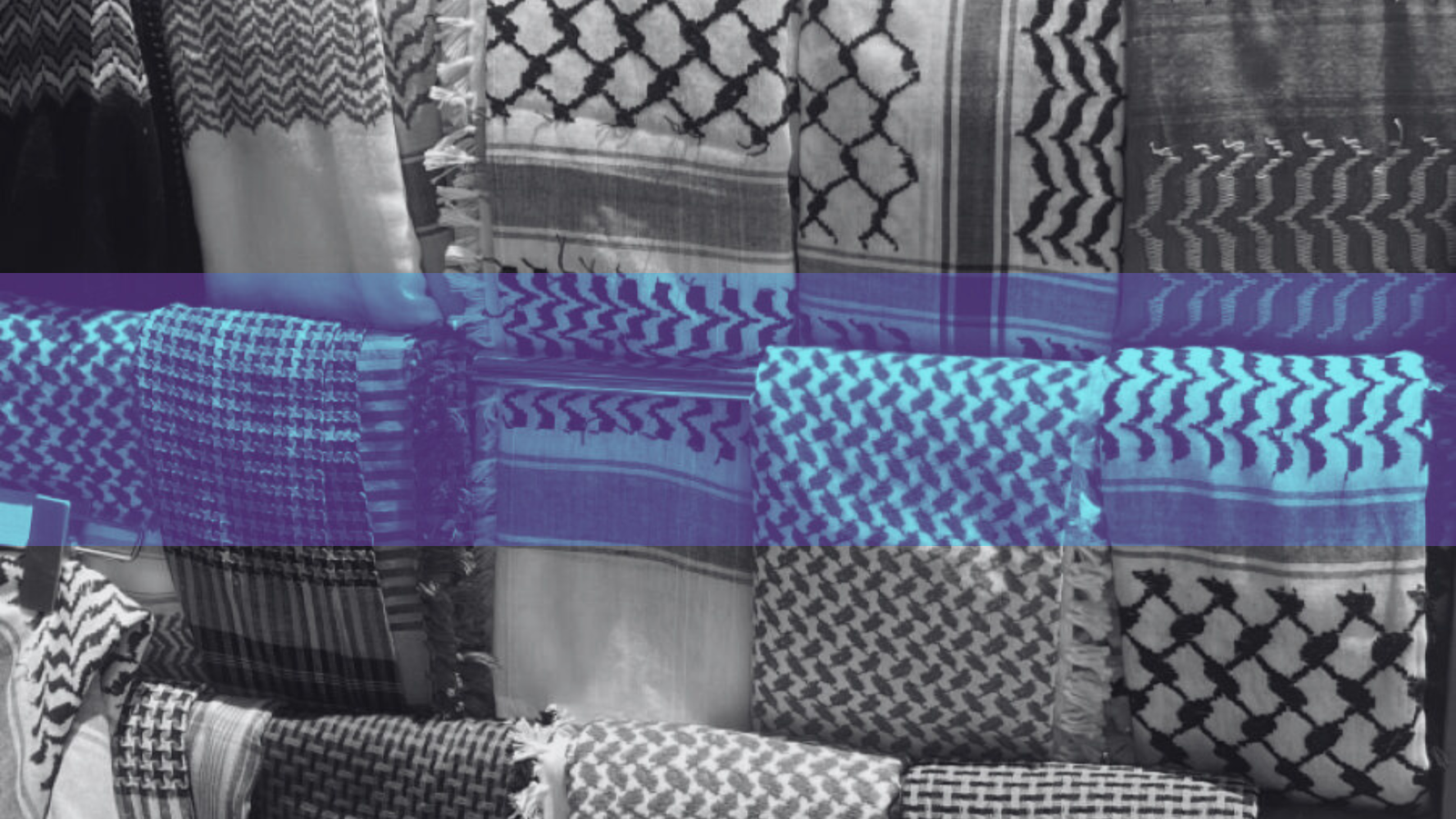
- Distinctive patterns: Black and white Palestinian keffiyehs often feature fishnet motifs and olive branch borders, while red and white Jordanian shemaghs display bolder checks.
- Hand finished edges: Authentic scarves have knotted or braided fringes created by hand, adding texture and craftsmanship.
Origins and symbolism
The keffiyeh evolved among Bedouins as a practical response to desert sun and sand. Farmers wore plain versions for work, while decorated scarves signalled tribal affiliation or social rank. In Palestine, black and white keffiyehs became a sign of resistance in the nineteen thirties. Villagers adopted them to show unity. Later, political leaders and artists wore the scarf at protests and cultural events. Their choice made it a marker of national identity.
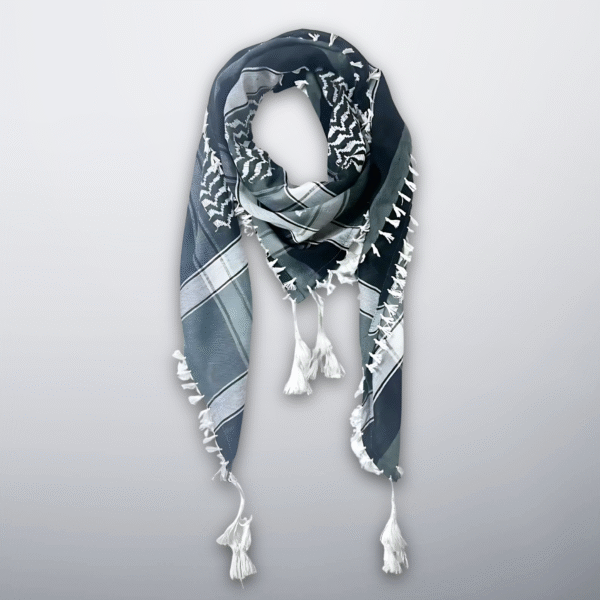
Colour also carries meaning. Jordanians see the red and white shemagh as a national symbol. Red often signals bravery and white suggests purity and wisdom. The black and white Palestinian keffiyeh represents land and the struggle for freedom. Today, you can find many colours and designs. Each one carries threads of history.
How authentic keffiyehs are made
Weaving keffiyehs is a labour intensive craft and now rare. In Hebron, the Hirbawi factory has made keffiyehs since nineteen sixty one. It is now the last of its kind in Palestine. The workshop once ran fifteen machines and produced one hundred fifty thousand scarves each year. Today, only a few antique looms still work. Trade restrictions limit output to about ten thousand scarves annually. Mass produced copies flood the market. Authentic handmade keffiyehs still offer better quality.
At Hirbawi, artisans use a traditional cross stitch technique. They create a two tiered design. The base forms a fishnet like structure covering most of the scarf. The outer tier adds ornate motifs or flowers along the borders. Even though looms weave the fabric, artisans still cut each thread by hand. They also knot and sew tassels onto the edges. This careful process makes each keffiyeh unique and durable. Workers see the craft as a labour of love. They keep making quality scarves because the garment preserves heritage and holds meaning for the wearers.
Choosing a keffiyeh shop
With the global popularity of the keffiyeh, many stores offer cheap imitations that lack quality and authenticity. To find a reputable keffiyeh shop, consider these tips:
- Ask where the scarf was made. Trustworthy sellers mention the factory or artisan. Keffiyehs from Hirbawi’s workshop in Hebron come from the last Palestinian factory.
- Check materials. Genuine scarves use cotton or cotton blends for breathability. Avoid polyester or shiny fabrics that only mimic the look.
- Inspect patterns and edges. Authentic keffiyehs have clear patterns and hand knotted fringes. Mass produced copies often have printed designs and loosely finished edges.
- Support ethical businesses. Buy from small family shops or cooperatives to sustain artisans. Hirbawi’s success comes from online sales and fair partnerships.
The Kuffiyah dot com difference
Kuffiyah dot com offers authentic scarves crafted by Palestinian artisans. The marketplace sources them directly from workshops in Hebron, including Hirbawi. This ensures fair compensation and high quality. You can choose from classic black and white patterns to limited edition designs and red and white shemaghs. Shopping there supports the families who keep this tradition alive.
Final thoughts
The keffiyeh started as a simple head cover. Today it is a global symbol of identity. Its story is woven with history, craft and resilience. Mass produced versions are easy to find. Authentic keffiyehs still lie at the heart of the tradition because artisans make them by hand. When you choose a scarf, think about its origins, materials and makers. A genuine keffiyeh protects you from the elements and connects you to a legacy of art and solidarity. A trusted keffiyeh shop helps that legacy continue.